
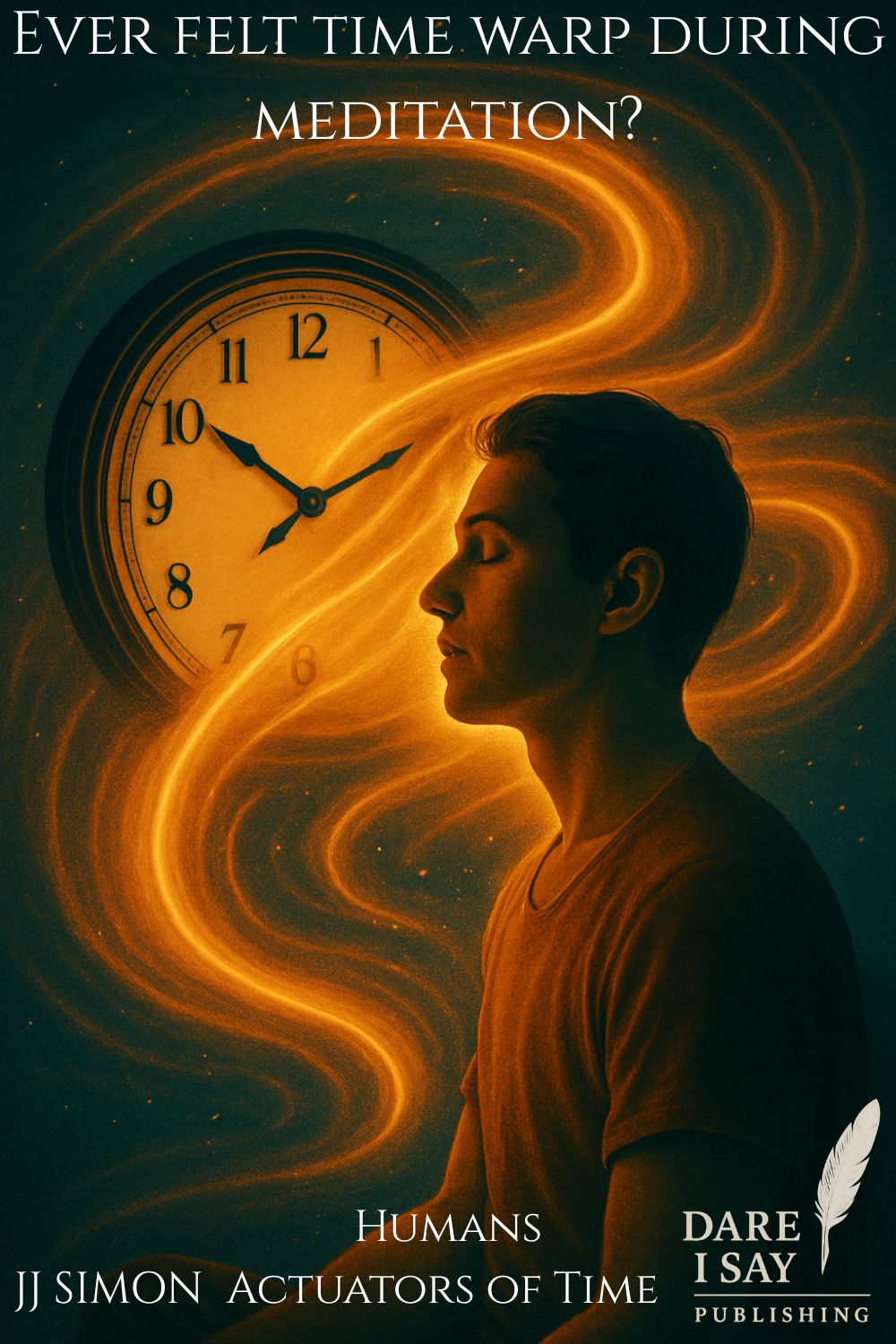
You sit down to meditate. Your eyes close. You breathe deeply.
The outside world softens until it’s just a faint hum.
When you open your eyes, the clock insists you’ve been gone for twenty-three minutes…
but your mind swears it was only ten.
This is more than a quirky moment.
It’s a glimpse into the way human consciousness shapes time itself.
Why Meditation Alters Time Perception
Time is often described as a steady march forward—second after second, tick after tick. But in reality, our experience of time is far from mechanical.
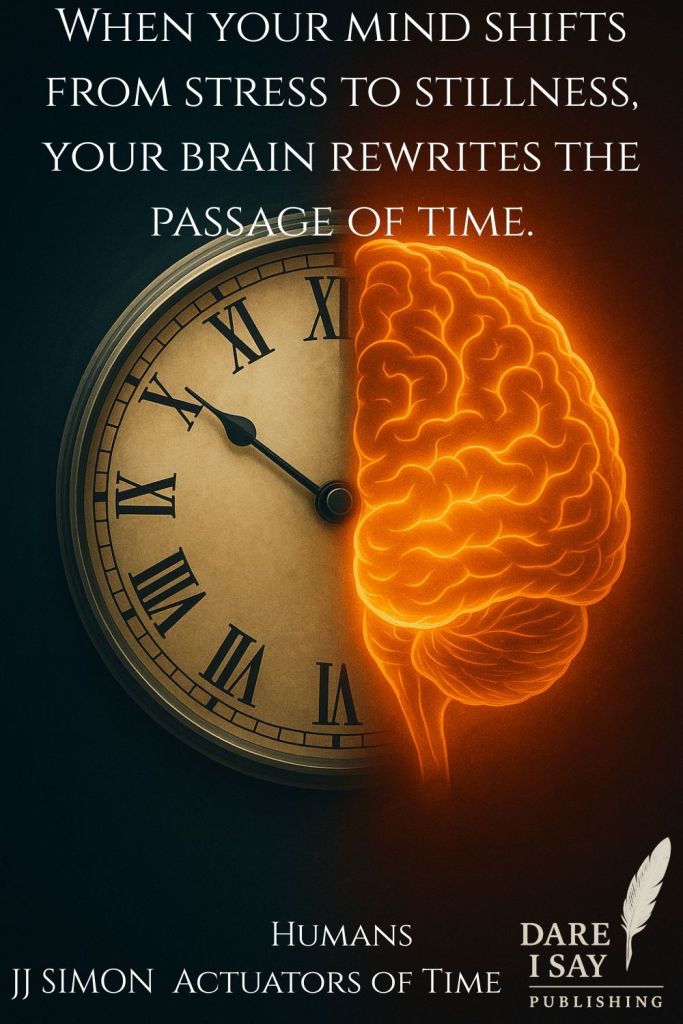
Neuroscience shows that time perception is deeply tied to attention and emotion.
When we are stressed, our brains are hyper-vigilant, scanning the environment for threats. This heightened awareness makes each moment feel longer—five anxious minutes can feel like an hour.
In meditation, the opposite occurs. Our attention shifts inward. The chatter of the “default mode network” in the brain quiets, brainwave patterns slow, and physiological stress signals ease. Without constant mental timestamping from external events, our perception of time loosens. Twenty minutes can slip past in what feels like five.
The Role of the Actuator
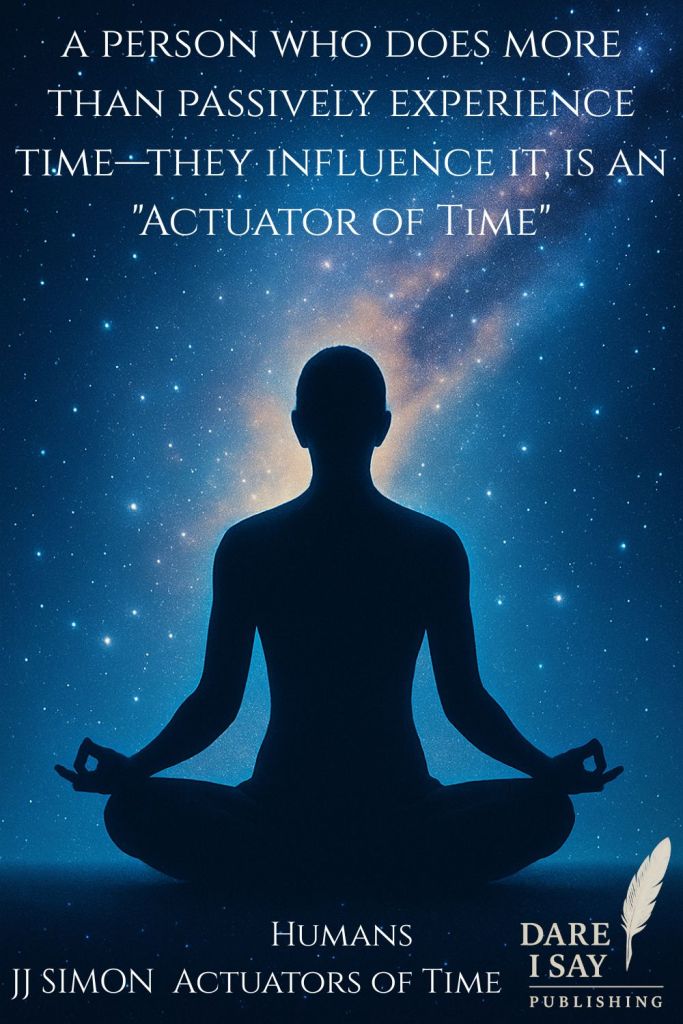
In Humans Actuators of Time, JJ Simon uses the word “actuator” to describe a person who does more than passively experience time—they influence it.
When you meditate, you become an actuator.
You’re not just a passenger on time’s conveyor belt—you are, in a sense, at the controls of how it moves through you.
You shape it from within.
You stretch it. Compress it.
You turn it into something elastic, responsive to your state of mind.
This isn’t the science-fiction idea of time travel.
It’s subtler, and perhaps more profound: a conscious engagement with the fabric of your own lived experience.
How to “Actuate” Time in Meditation
You don’t need hours of practice to notice the shift—just a willingness to observe.
Try this:
- Set a Timer – Choose a meditation length (10, 15, or 20 minutes).
- Breathe Deeply – Focus on the rhythm of your breathing, or on a simple word or phrase.
- Release the Clock – Don’t count breaths or watch the time—immerse yourself in the inner landscape.
When the timer sounds, notice how much time feels like it has passed.
You might find that your inner clock has been rewritten.
Beyond the Cushion
This shifting of time perception isn’t limited to meditation. You’ve likely felt it:
- In deep creative work where hours vanish without notice.
- In heartfelt conversations that feel timeless.
- In moments of awe where seconds expand into eternity.
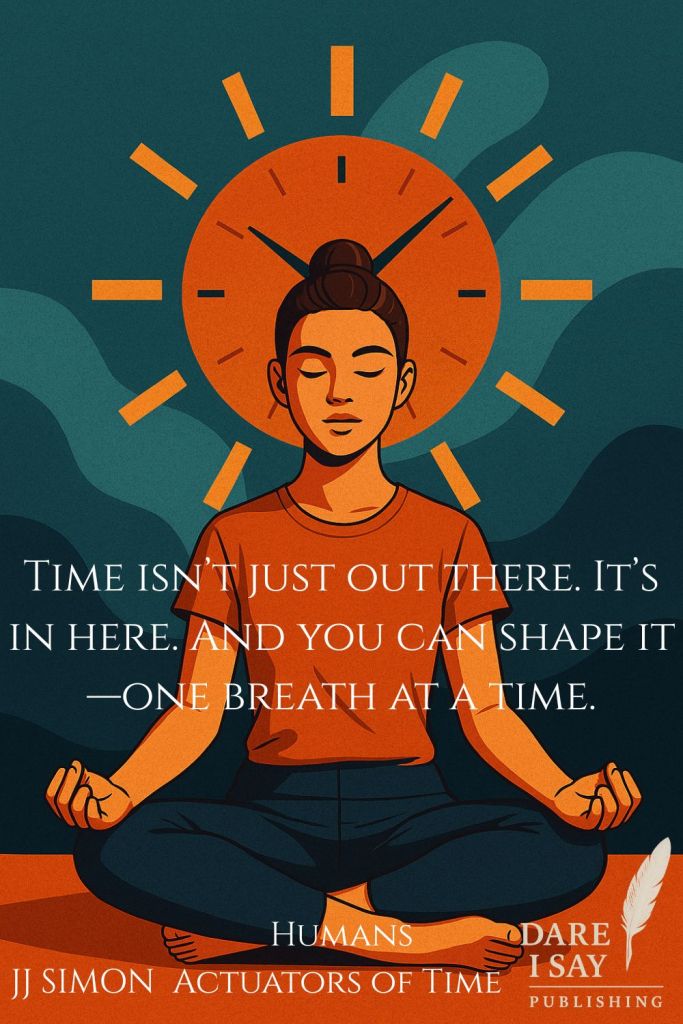
Each of these moments hints at the same truth—time is not just “out there” on a clock. It’s also “in here,” shaped by the way we pay attention.
One Breath at a Time
When you meditate, you become a traveler—not across miles, but across moments.
You collapse anxiety, stretch presence, and touch something beyond the mechanical ticking of seconds.
Time isn’t just a fixed backdrop to your life.
It’s an active participant—one you can shape, one breath at a time.
If you want to explore how human beings can consciously engage with it—Humans Actuators of Time dives deep into this fascinating territory.
📖 Read more in Humans Actuators of Time — Available now on Amazon.
💬 Have you ever experienced a moment where time seemed to speed up, slow down, or even disappear entirely?
Share your time-warping moments in the comments — I’d love to hear your stories.
🎥 Want to see this idea come to life?
Watch the short meditation–time perception video on our YouTube channel.

Leave a comment