
We live in a world that scrolls, skims, and swipes. We consume endless headlines, captions, and soundbites—but do we truly read anymore?
Real reading is different. It’s slower, deeper, and infinitely more powerful. A book doesn’t just pass time—it reshapes your mind, your mood, and even the world around you.
In this post, I’ll share two perspectives on the power of reading—each paired with a short video. The first explores the science of how nonfiction sharpens your brain and strengthens resilience. The second dives into the soul of reading and how your insights ripple outward into the world.
Think of them as two sides of the same coin: the science within you and the resonance beyond you.
The Science of Reading Nonfiction
In this first video, we explore the neuroscience of reading—what actually happens in your brain when you dive into nonfiction and why it’s such a powerful tool for growth.
Reading is not passive. It’s not just a leisure activity—it’s a neurological symphony.
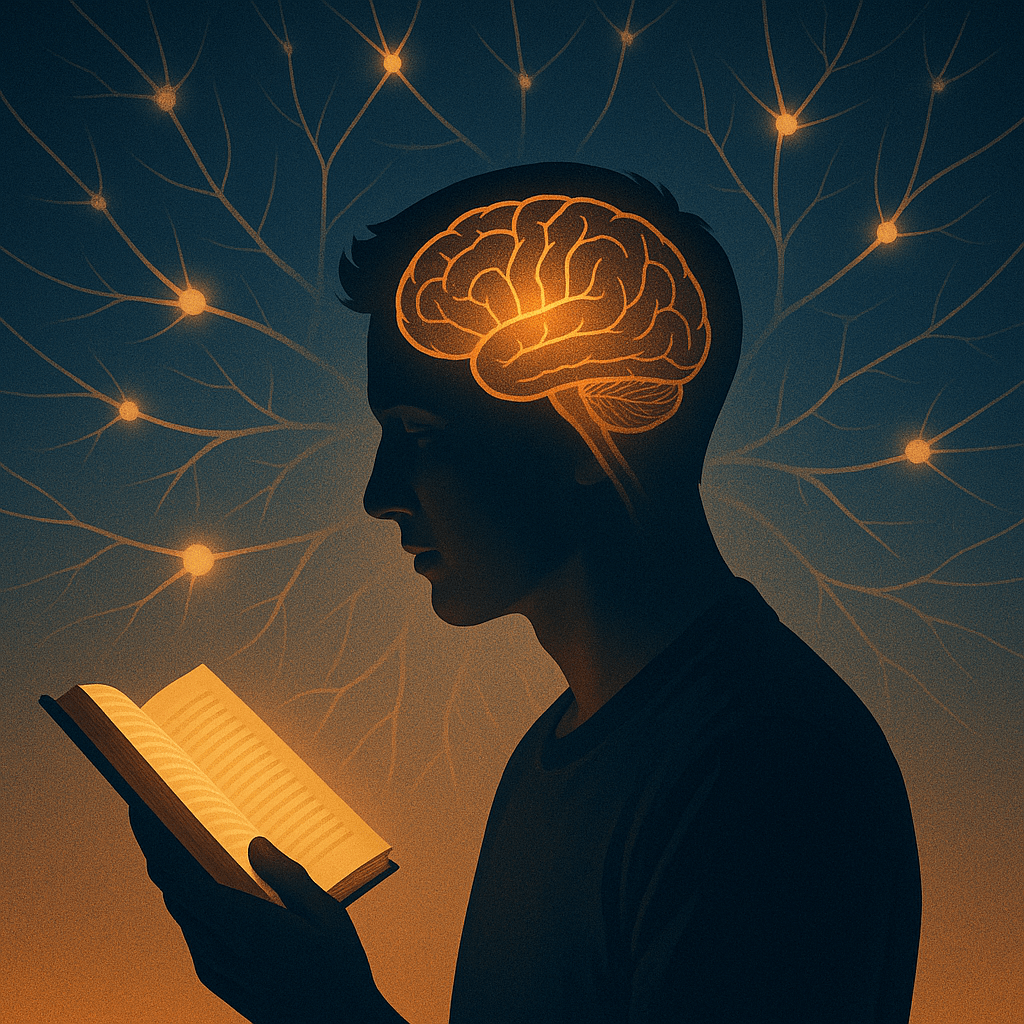
When you pick up a book, your brain doesn’t merely recognize words. It lights up. MRI scans show that reading activates not only the language centers, but also regions responsible for visual imagery, empathy, memory, and even motor functions. You don’t just read about someone running—you simulate the run. You don’t just understand a perspective—you inhabit it.
That’s the science of reading. And it’s powerful.
Nonfiction, in particular, offers something vital—it fortifies your mind. It builds frameworks, strengthens mental models, and equips you with tools for growth. Neuroscience confirms that reading nonfiction activates the prefrontal cortex—the part of the brain responsible for critical thinking, problem-solving, and decision-making.
The benefits don’t stop there. Studies show that people who read nonfiction regularly are:
- More emotionally resilient
- More adaptable to change
- Less susceptible to misinformation
- More likely to pursue lifelong learning
In an age of distraction and shallow feeds, nonfiction gives you context, clarity, and grounding. It’s how you learn from other people’s lifetimes—without repeating their mistakes. It’s how you spot patterns in history before they repeat. And it’s how you reclaim focus in a world designed to scatter it.
“Nonfiction doesn’t just expand your vocabulary—it expands your reality.”
The Soul of Reading
Science gives us data. Brain scans and studies reveal how reading strengthens cognition, focus, and empathy. But numbers and neurons don’t capture the whole story.
Because reading is more than circuits firing in your brain—it’s energy radiating outward. The growth you experience doesn’t stay contained; it moves through you into your relationships, your community, and even the collective imagination.
This second video shifts from science to soul, showing how the act of reading radiates outward, shaping not only your own life but also the collective field around you.
When you read for personal growth and inspiration, your mind expands—and so does the field around you. Through morphic resonance, your insights ripple into the collective, subtly influencing others, even those you’ve never met. Through limbic resonance, the emotional truths you encounter and integrate radiate outward, affecting the mood and connection of those in your orbit.
A single reader can quietly shift the current of a conversation, a community, or even a culture.
- Reading activates empathy and imagination → allows us to live through lives not our own.
- Stories help us connect across differences → shaping compassion and bridging human divides.
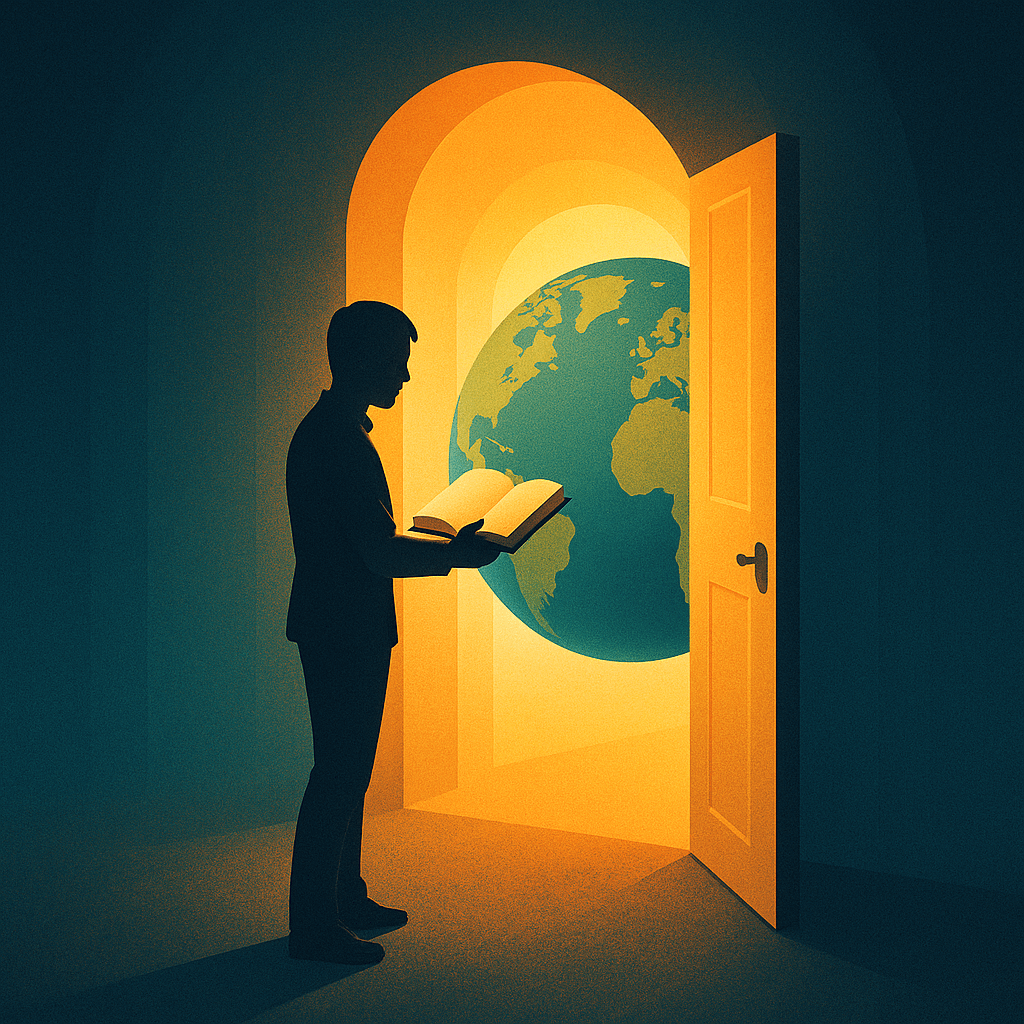
“Every book you open is a doorway—not just for your growth, but for the world.”
Science Meets Soul
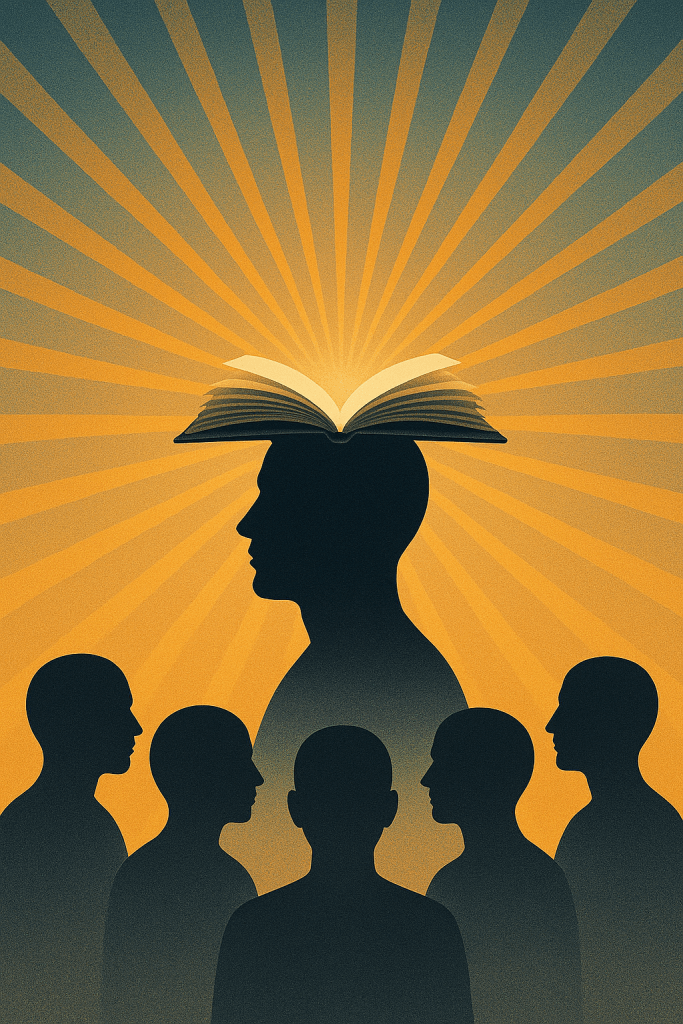
Together, these two perspectives remind us that reading isn’t an isolated act. The science shows how it transforms the individual mind. The soulful lens shows how that transformation flows into the shared field of humanity.
Reading is personal, but it’s never private. Every page you turn is a step in your own evolution—and an offering to the world.
“When one mind is lifted, all minds feel the pull toward higher ground.”
Conclusion: Return to Reading
So the next time you feel lost in a sea of distraction, remember: a book is more than paper and ink. It’s a neurological workout, a spiritual resonance, and a doorway to something greater.
Read to sharpen your mind.
Read to expand your empathy.
Read to lift not only yourself, but everyone around you.
Because when we return to reading, we return to ourselves—and we give more back to the world.
Join the Conversation
What role has reading played in your life?
- Do you lean more toward nonfiction for growth—or fiction for imagination?
- Has a particular book ever shifted the way you think or live?
- How do you make time for deep reading in a busy world?
I’d love to hear your thoughts. Share your experiences in the comments—your story might inspire someone else to pick up their next book.

Leave a comment