
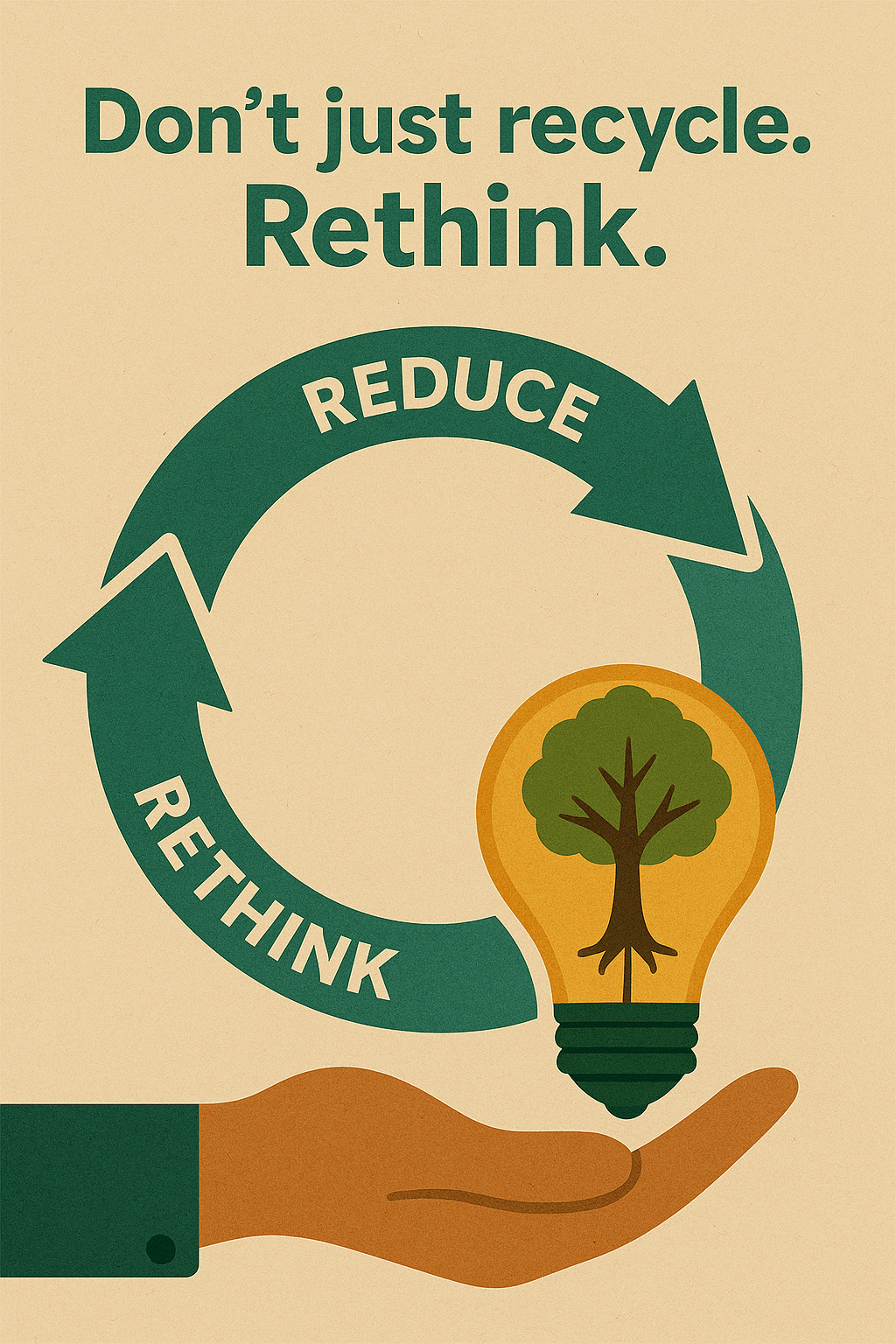
When most of us think about waste, we picture trash bags piled at the curb, recycling bins stuffed with bottles, or maybe the compost heap at the back of a garden. But “waste” isn’t just about what ends up in the garbage. It’s also about how we live, what we consume, and the choices we make every day.
That’s where the 5 R’s of Zero Waste come in: Refuse, Reduce, Reuse, Recycle, and Rot.
These five simple principles offer a framework for living more lightly on the planet, without sacrificing convenience, comfort, or joy. They’re not rules to follow perfectly (no one gets it right 100% of the time). Instead, they’re reminders that small, intentional shifts can add up to massive impact.
Let’s take a closer look at each one.
1. Refuse: The Power of “No”
It starts with refusal. The simple act of saying no to things you don’t actually need.
Think of the free tote bags you’ll never use, the promotional pens that end up at the bottom of a drawer, or the single-use cutlery handed out with takeout meals. These items seem harmless on their own, but they add up fast, and most end up as waste.
Refusing isn’t about deprivation. It’s about drawing a boundary: choosing what has a place in your life and what doesn’t. Every “no” to unnecessary stuff is a “yes” to a cleaner home, a lighter lifestyle, and a healthier planet.
Quick win: Start carrying a simple script in your back pocket—“No thanks, I’ve got my own.” Whether it’s straws, bags, or freebies, a polite refusal makes a real difference.
2. Reduce: Simplify and Streamline
Once you’ve mastered “refuse,” the next step is reduce. This principle is all about cutting down on what flows into your life in the first place.
That might look like buying fewer clothes but investing in timeless, durable pieces. Or swapping fast fashion hauls for secondhand treasures. It might be downsizing your collection of cleaning products to a handful of multipurpose staples.
Reducing isn’t about restriction, it’s about freedom. By owning less, you often find yourself with more: more space, more clarity, more time. And yes, less waste.
Quick win: Do a “mini audit” of your weekly shopping. Is there one item you could buy less of, make at home, or skip entirely? That single change could cut your waste significantly.
3. Reuse: Creativity Over Consumption
The third R is where things get fun: reuse.
This is the art of giving everyday items a second, third, or even tenth life. It’s patching a favorite pair of jeans instead of tossing them. It’s repurposing a glass jar into a vase, a leftover container, or even a lantern. It’s letting creativity drive how you use what you already own.
Reusing taps into an older, almost forgotten rhythm of life when mending, repairing, and reimagining were simply part of being resourceful. In our convenience-driven culture, that spirit feels refreshing, even radical.
Quick win: Choose one item you’d normally throw away this week and find a way to reuse it. Even something as simple as turning an old T-shirt into a cleaning rag counts.
4. Recycle: Do It Smarter
For years, recycling was hailed as the ultimate eco-solution. And while it still plays an important role, it’s actually fourth on the list for a reason.
Recycling should come after refusing, reducing, and reusing because it’s not a perfect system. Many materials (especially plastics) aren’t truly recyclable and often end up in landfills anyway. Others lose quality each time they’re reprocessed.
But recycling done right is still powerful. It closes the loop, saves resources, and reduces pollution. The key is to be intentional: know your local rules, separate materials properly, and don’t assume everything “green-looking” belongs in the bin.
Quick win: Pick one category (like plastics or cardboard) and learn exactly how your municipality handles it. A few minutes of research could drastically improve the effectiveness of your recycling.
5. Rot: Returning to the Earth
The final R brings us back to the ground, literally. Rot is about composting organic waste like food scraps, yard trimmings, and paper products.
When sent to landfills, this material releases methane, a potent greenhouse gas. But when composted, it transforms into nutrient-rich soil that feeds gardens, trees, and future harvests.
You don’t need a big yard or fancy bin to start composting. Many cities now offer curbside pickup, and there are compact systems designed for apartments. Even freezing your scraps and dropping them off at a local collection point makes a difference.
Quick win: If you cook regularly, start by collecting your veggie peels in a container (or freezer bag) instead of tossing them. At the end of the week, look into composting options near you.
The 5 R’s in Daily Life
Individually, each of these practices might seem small. But together, they create a lifestyle shift. By refusing what you don’t need, reducing what you bring in, reusing what you already have, recycling wisely, and composting food scraps, you start to live in harmony with the planet rather than against it.
More importantly, the 5 R’s remind us that sustainability isn’t about perfection. It’s about progress. Even one small change, like carrying your own coffee cup or refusing a plastic bag, ripples outward, inspiring others and making an impact greater than you can see.
Want to Go Deeper?
The 5 R’s are just the beginning. In Zero Waste, Maximum Impact: A Practical Guide to Sustainable Living, Ainsley Fox takes these principles further, offering:
- Step-by-step guides for real-world application
- Budget-friendly swaps that actually save money
- Insights and inspiration to keep you motivated
- Ways to apply the 5 R’s not just at home, but in travel, work, and community life
It’s a roadmap for anyone who wants to live more intentionally, reduce waste, and create a ripple effect of positive change. Available now.
Because at the end of the day, waste isn’t just about trash. It’s about the life you choose to live.
What about you? Which of the 5 R’s—Refuse, Reduce, Reuse, Recycle, or Rot—do you already practice the most? And which one feels like your next step? We’d love to hear your thoughts, tips, and experiences in the comments below.
Want a quick, visual breakdown? Check out our YouTube Short on the 5 R’s of Zero Waste, it’s the perfect companion to this post.

Leave a comment