

Time seems stable—until you start paying attention to it.
On clocks and calendars, it moves with precision. Seconds, hours, days, years. Clean, consistent, measurable.
But in lived experience, time behaves very differently.
It stretches.
It compresses.
It disappears.
It lingers.
Moments of fear or intensity can feel expanded, almost slowed down. Entire weeks can vanish in hindsight, reduced to fragments of memory.
This isn’t just a poetic observation.
It’s something the brain is actively doing.
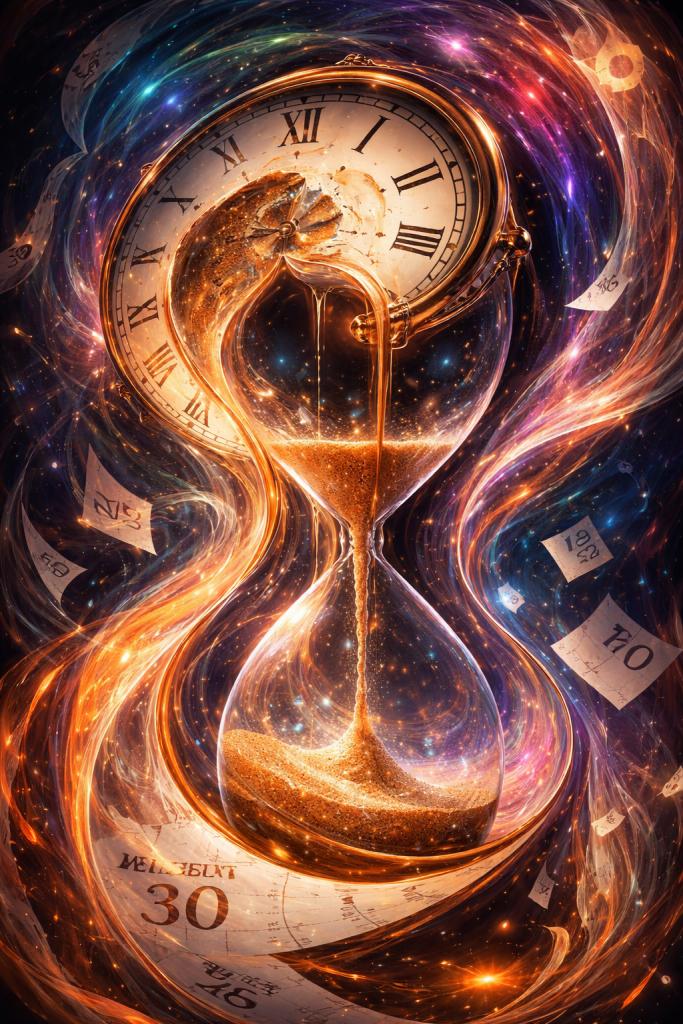
The Elastic Nature of Time
Neuroscience has spent years studying how we perceive time, and the results are remarkably consistent.
Our sense of duration depends on:
- attention
- novelty
- emotional intensity
- memory encoding
When something is new or important, the brain allocates more resources. More detail is captured. The experience becomes dense.
Later, when we look back, that density makes the moment feel longer.
When something is repetitive or familiar, the brain conserves energy. Less detail is stored. The experience compresses.
Looking back, it can feel like time barely passed at all.
This is not a flaw in perception.
It is how the system works.
Time Is Felt, Not Just Tracked
Physics gives us extraordinary tools to track time with precision.
But clocks do not feel time.
Humans do.
And what we experience as time is inseparable from how we engage with the world.
Stress can alter internal pacing.
Focus can dissolve awareness of duration.
Emotion can reshape memory.
Attention determines what is remembered.
What we attend to becomes temporally significant.
What we ignore fades.
From Perception to Participation
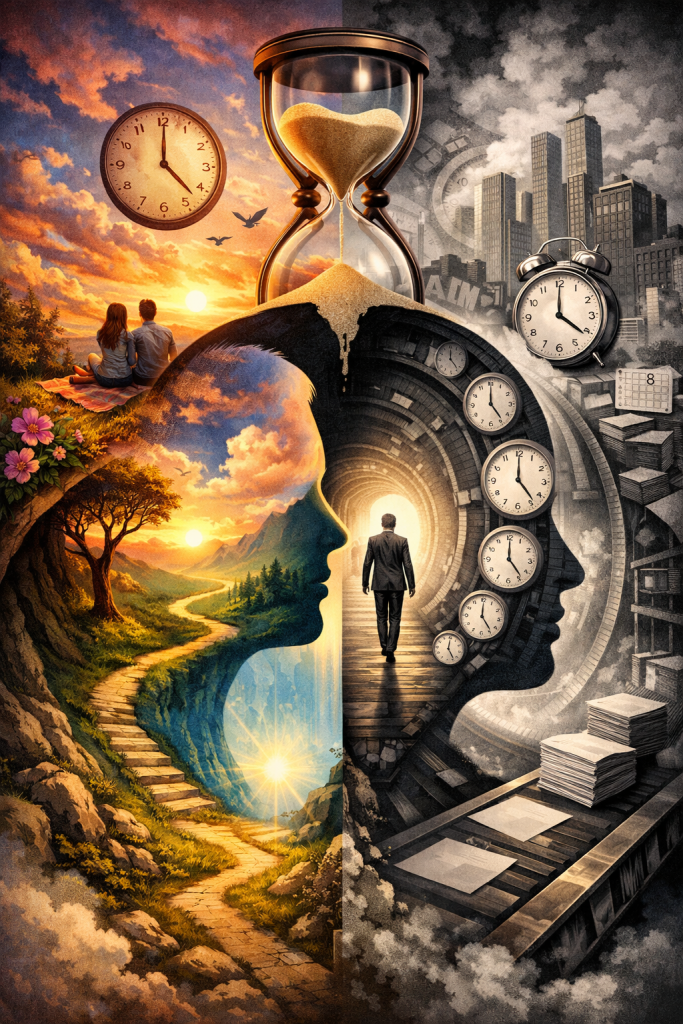
If time varies with attention and memory, then perception is not secondary.
It is part of the process.
The mind does not simply register moments as they pass. It organizes them. It prioritizes them. It builds sequences out of them. It even projects futures that do not yet exist—and acts in the present because of them.
It decides what matters.
In doing so, it contributes to how time is structured in experience.
And once time is understood as something felt, encoded, and remembered, the human role can no longer be passive.
This is where the idea behind Humans Actuators of Time becomes clearer.
Not that humans control time—but that we participate in how it takes form in lived reality.
Through attention.
Through memory.
Through meaning.
Why Experience Changes Time
When people say time “flew by” or “dragged on,” they are describing real patterns in how the brain processes experience.
A highly engaging moment can feel short in the moment—but expansive in memory.
A dull routine can feel slow while it’s happening—but nearly invisible in hindsight.
So which one represents “real” time?
The measured duration—or the experienced one?
The answer may be both.
But they are not the same.
Time as a Lived Structure
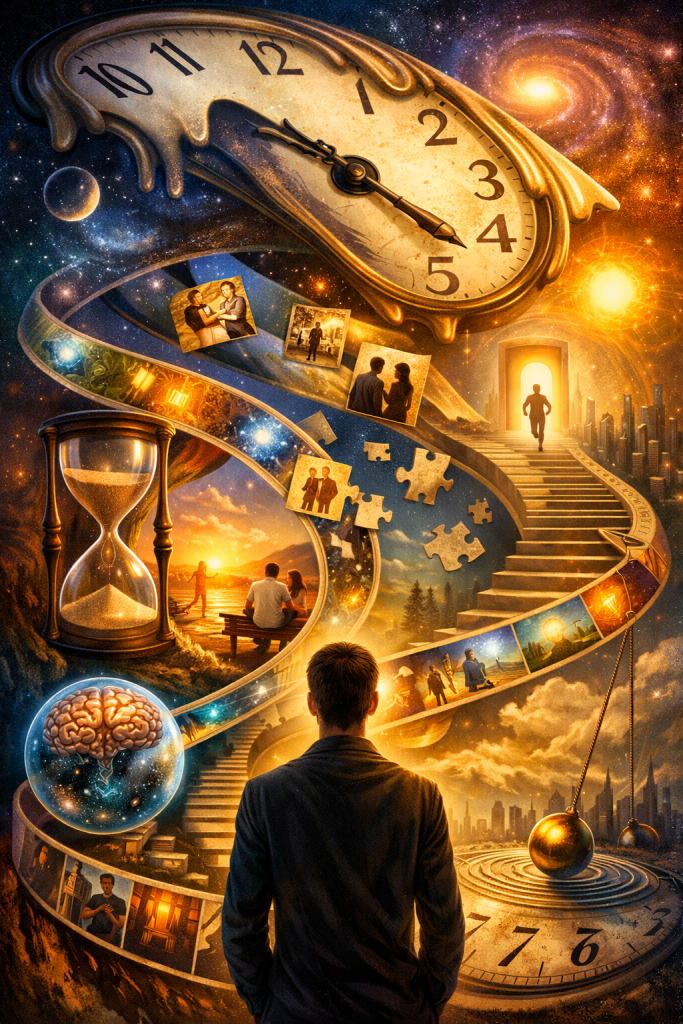
Traditional models describe time as something external—a dimension, a coordinate, a measurable sequence.
Those descriptions are essential. Without them, we would not have technology, navigation, or coherent physics.
But they don’t capture what time feels like from the inside.
Human time is structured through:
- attention
- memory
- emotional significance
- engagement
It expands where life is vivid.
It contracts where life is automatic.
These patterns are not random. They reflect how human systems allocate cognitive and emotional resources.
In that sense, time is not just something we move through.
It is something that takes shape through how we live.
An Active Role in Time
The science of perception confirms something many people feel but rarely articulate:
Time is malleable.
If experience shapes time, then how we engage with the world matters in a very real way.
Attention influences duration.
Memory influences scale.
Meaning influences weight.
This doesn’t make time purely subjective.
But it does mean we are not passive within it.
We participate in its structure.
A Different Way of Seeing Time
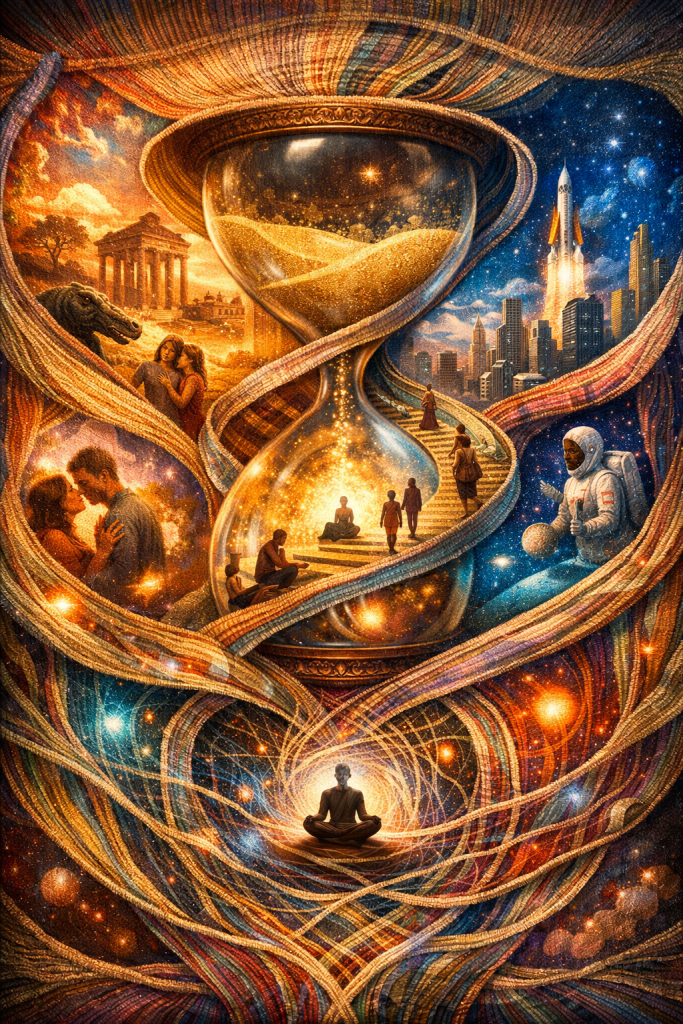
Instead of thinking of time as something that simply carries us forward, it may be more accurate to see it as something that forms through interaction.
Between brain and world.
Between perception and process.
Between experience and structure.
Time is not only measured.
It is lived.
From the Publisher
At Dare I Say Publishing, we explore ideas that sit at the intersection of science, experience, and meaning.
If this perspective on time resonates, you’ll find more through essays, blogs, videos, and authors willing to question familiar assumptions.
And in Humans Actuators of Time, the question is taken further—not to define time conclusively, but to explore how human experience participates in shaping it.
Because time is not just passing.
It is being lived.

Leave a comment