From the desk of Dare I Say Publishing
Reading time: 5–6 minutes
Let me start with a simple observation.
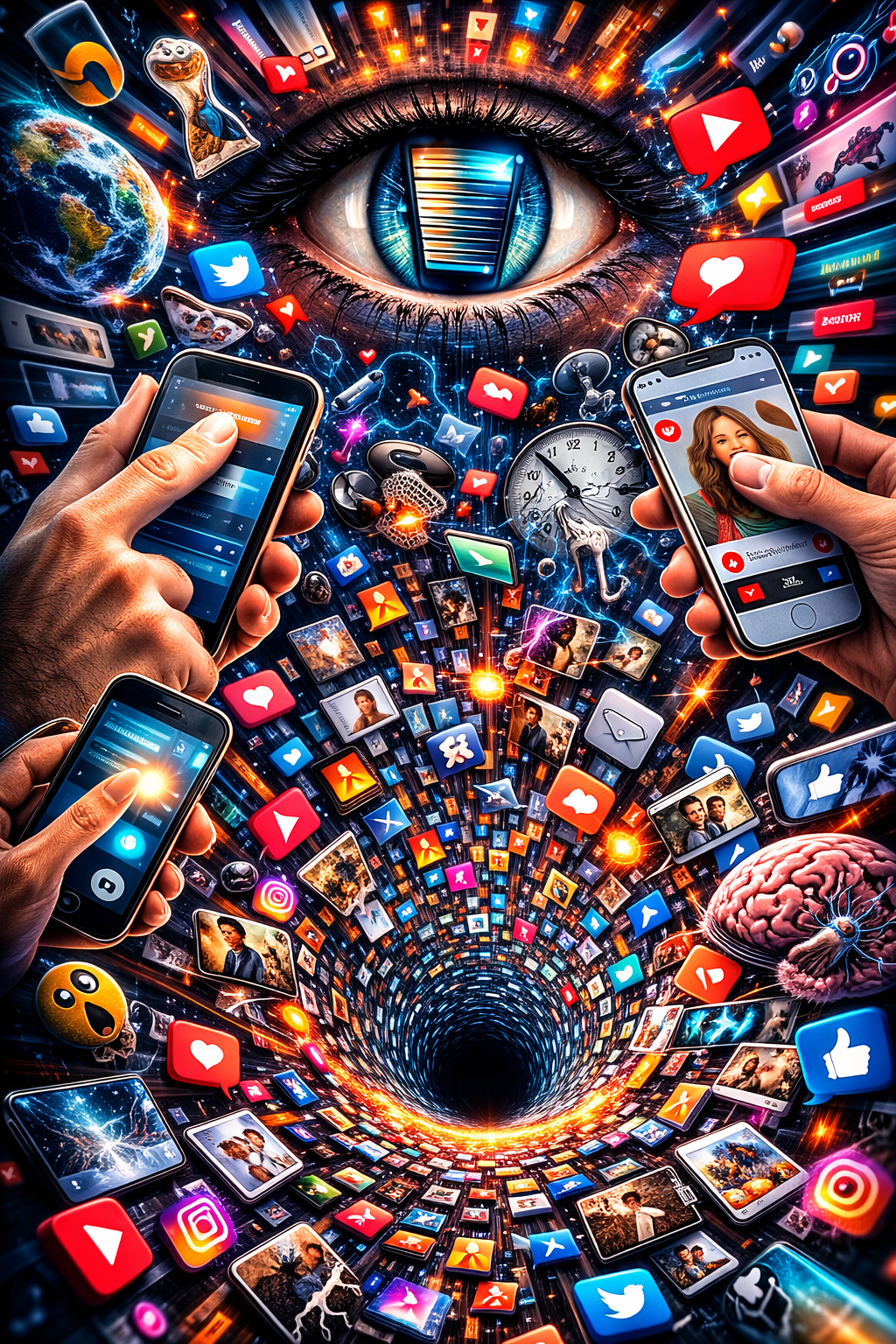
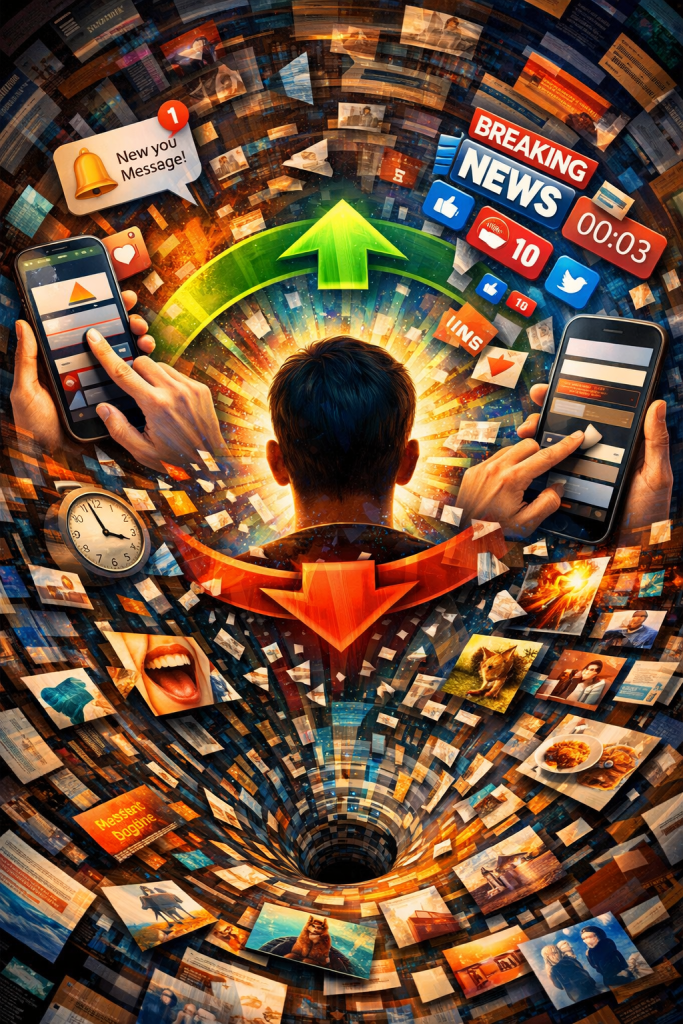
We live in a world that scrolls.
Scroll up. Scroll down. Swipe left. Swipe right.
Notifications. Headlines. Endless noise.
Information flies past us faster than we can think about it.
Clips replace chapters. Headlines replace conversations.
A thousand tiny fragments compete for just a few seconds of our attention.
And yet, quietly sitting somewhere… a book waits.
Not blinking.
Not buzzing.
Not demanding.
Just waiting.
At Dare I Say Publishing, we believe that moment—the moment someone opens a book—is one of the most powerful acts a human being can perform.
It may look simple.
But inside the brain, something extraordinary is happening.
Reading Is One of the Most Active Things the Brain Can Do
Many people think reading is passive.
You sit still.
You look at words.
You turn pages.
But neuroscience tells a very different story.
Reading activates an astonishing network of brain systems simultaneously.
- The visual cortex decodes the symbols on the page
- Language centers translate them into meaning
- Memory networks connect ideas to your life
- Emotional circuits simulate feelings and experiences
- Imagination constructs entire worlds
Your brain is not just reading.
It is building reality.
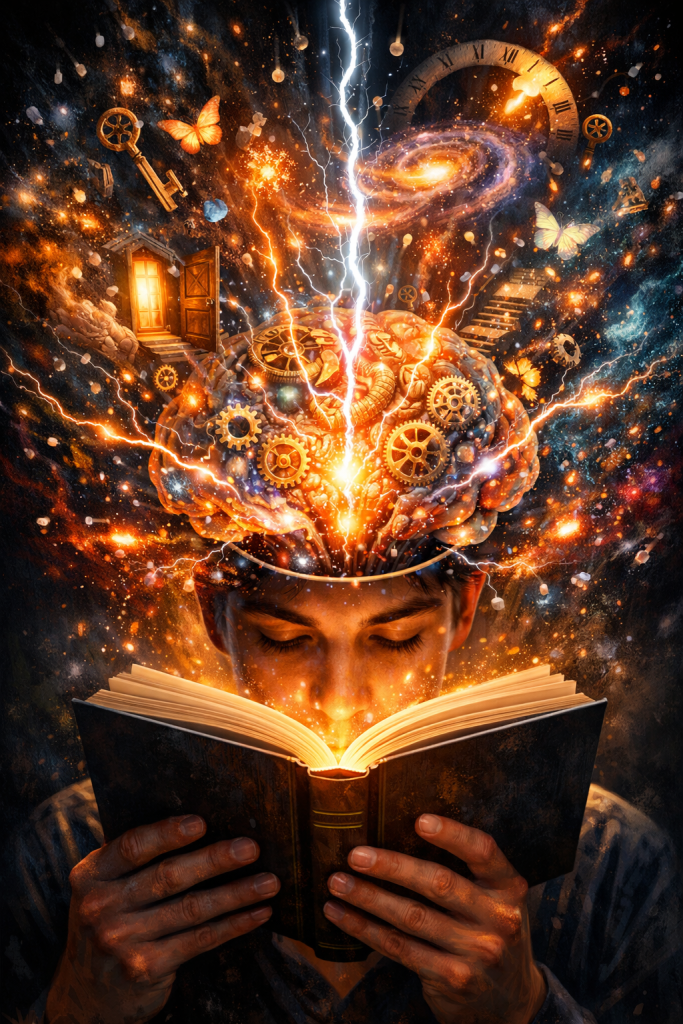
When a character runs, your motor cortex activates.
When a story becomes tense, your emotional centers respond.
When an idea challenges you, your neural connections begin to reorganize.
Reading is not passive consumption.
It is mental creation.
And every page strengthens the pathways that make thinking possible.
Books Let Us Experience Other Minds
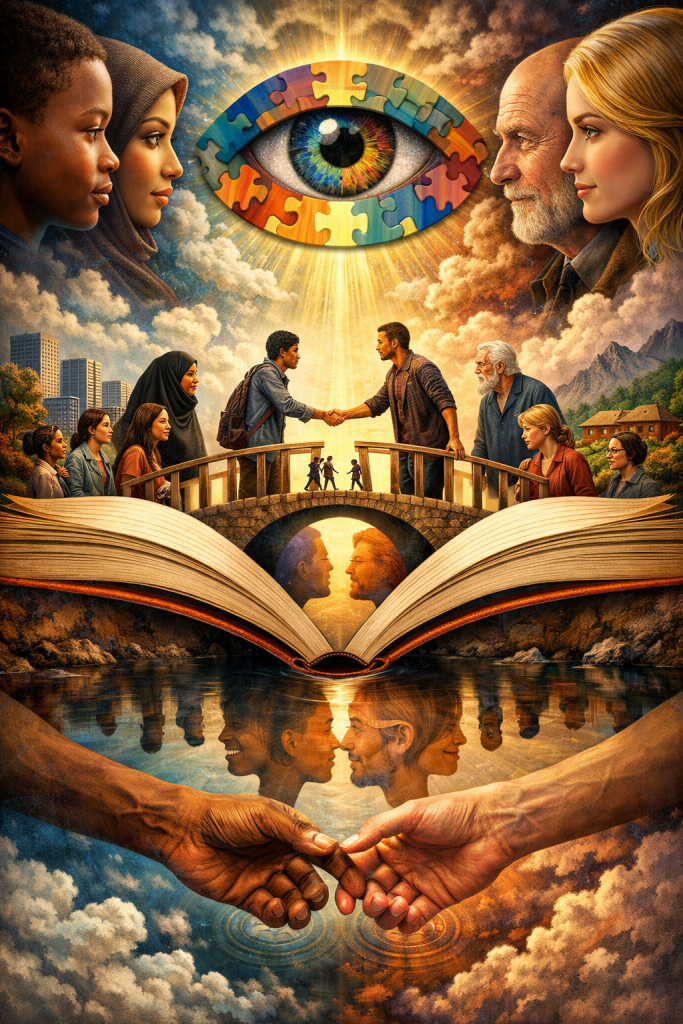
One of the most remarkable gifts of reading is empathy.
When we read, we step into someone else’s perspective—their fears, their hopes, their struggles, their triumphs.
Psychologists call this ability theory of mind.
It is the capacity to understand what another person is thinking or feeling.
Studies consistently show that readers of narrative literature often develop stronger emotional intelligence and social awareness.
Why?
Because every story is a practice session in understanding humanity.
For a moment, you inhabit another consciousness.
And when you return to your own life, you bring that expanded awareness with you.
In a world that often feels divided, this may be one of reading’s greatest contributions:
Books teach us how to understand one another.
Reading Calms the Mind
Here is something fascinating.
Within minutes of reading, the body begins to relax.
Heart rate slows.
Muscle tension decreases.
Stress levels begin to drop.
Why?
Because reading requires focused attention.
Instead of juggling multiple streams of information or constant mixed inputs, the mind settles into a single, structured narrative. Distractions fade. Thoughts quiet.
The brain enters a state of deep concentration.
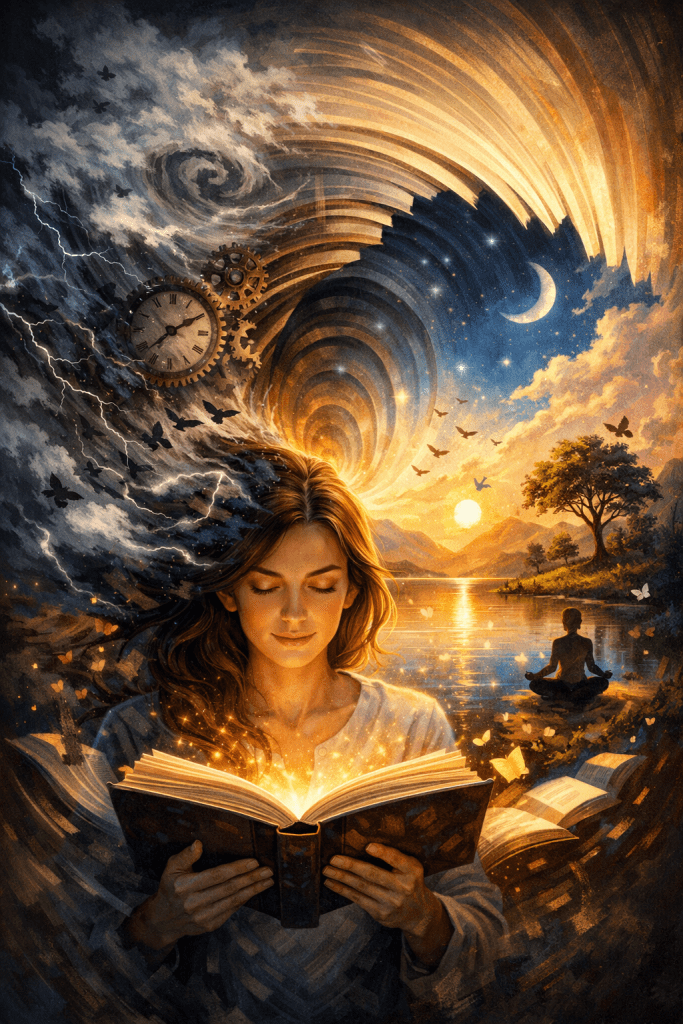
In many ways, reading functions like a form of meditation.
Not silent meditation.
But cognitive meditation.
A book gently guides the mind away from noise and anxiety, and toward reflection.
Reading Is a Workout for the Brain
Just as lifting weights strengthens muscles, reading strengthens neural networks.
Scientists call this cognitive reserve.
The more we challenge the brain with language, ideas, narratives, and complexity, the stronger those mental structures become.
Over time, regular readers often develop:
- Stronger memory
- Better concentration
- More flexible thinking
- Greater problem-solving ability
Long-term research even suggests that consistent reading may help slow cognitive decline.
Think of reading as a daily workout for your mind.
No equipment required.
Just curiosity.
Reading Helps Us Sleep Better
Reading can also improve the way we rest.
Unlike phones and tablets, printed books do not expose the eyes to stimulating blue light.
Instead, reading creates a gentle transition between wakefulness and sleep.
The mind slows.
Thoughts settle.
And sleep comes more naturally.
It is one of the simplest—and most effective—nighttime rituals you can build.
Reading Shapes the Entire Lifespan
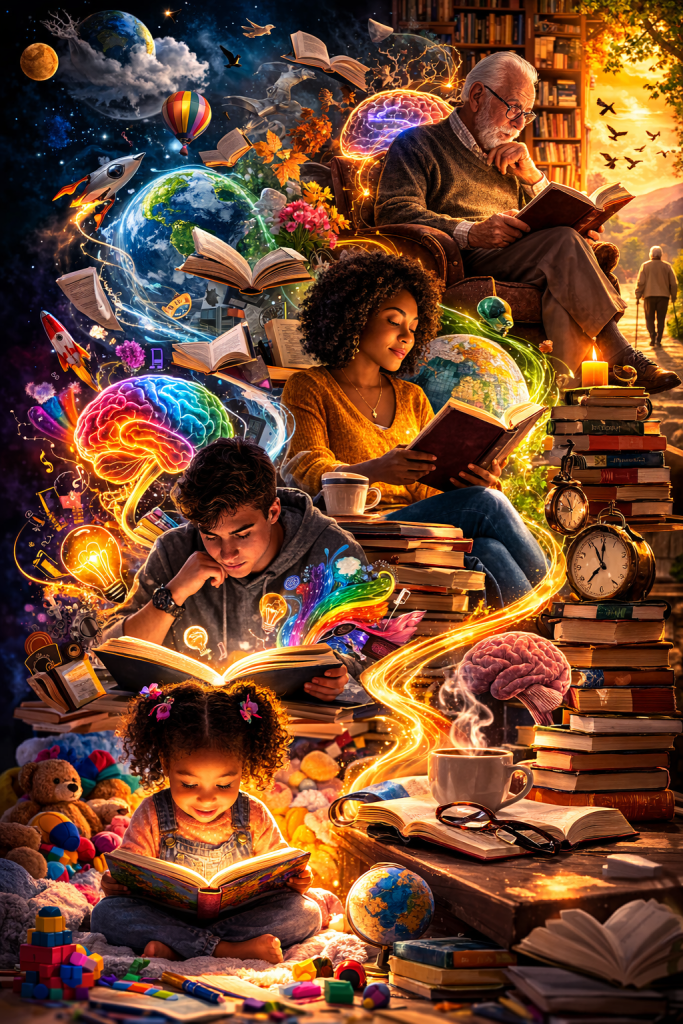
From childhood to old age, reading plays a powerful role in human development.
Children who read for pleasure often develop stronger language skills and cognitive abilities.
Adults who maintain reading habits continue expanding their knowledge, creativity, and perspective.
Older readers often preserve sharper memory and mental agility.
Across every stage of life, the pattern is remarkably consistent.
A person opens a book.
The brain begins building new connections.
And over time, those connections shape how we understand the world.
Why Books Matter in the Age of the Algorithm
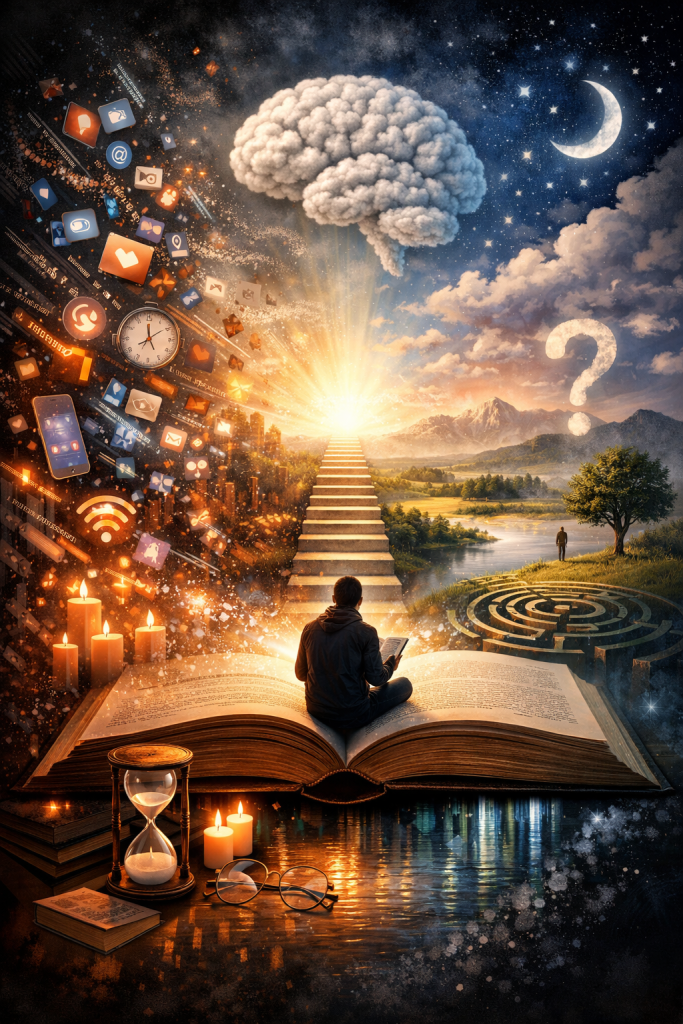
Modern technology is extraordinary.
But it often encourages speed over depth.
Quick clips.
Quick opinions.
Quick reactions.
Books do the opposite.
Books slow us down.
They invite us to think deeply, explore fully, and follow ideas wherever they lead.
They create something increasingly rare:
uninterrupted thought.
And that may be exactly what the modern mind needs most.
Reading Is a Conversation Across Time
Every book is a conversation.
When you open one, you are connecting with another mind—sometimes across decades, sometimes across centuries.
Philosophers. Scientists. Storytellers. Poets.
Their ideas are preserved in language, waiting for someone curious enough to engage with them.
Reading is not just information intake.
It is participation in humanity’s ongoing dialogue.
And when you read, you become part of that story.
A Small Habit with Massive Impact
The most powerful part of reading is how simple it is.
No expensive tools.
No complicated systems.
No training required.
Just a book.
Inside those pages are ideas that can reshape your perspective, strengthen your thinking, and expand your imagination.
At Dare I Say Publishing, we believe:
A person who reads becomes more thoughtful.
More curious.
More aware.
And when enough people read, something remarkable happens.
Societies become wiser.
Conversations become deeper.
The world becomes a more thoughtful place.
A Personal Note from Dare I Say Publishing
We started Dare I Say Publishing with a simple belief:
Books still matter.
Ideas still matter.
Curiosity still matters.
If you’re drawn to bold ideas, new perspectives, and meaningful conversations, we invite you to be part of what we’re building.
Explore our blogs.
Watch our YouTube videos.
Dive into our memes.
Meet our authors.
Discover our books.
And if something sparks your curiosity—stay connected.
Want to experience this in a different format?
We also created a full video version of this piece along with some shorts, exploring these ideas in a more visual and immersive way.
Watch it here:
If this resonated with you, consider subscribing to explore more ideas like this.

Leave a comment