
What Physics Reveals About the Possibility of a Universe Without Change
Series: Time, Consciousness, and New Science
By JJ Simon — Perspectives with JJ Simon
author of Humans Actuators of Time
Reading Time: approx. 11 minutes
I remember the first time I seriously considered this question. It did not feel like a scientific puzzle.
It felt like standing at the edge of thought itself.
Could time ever end?
Not stop like a broken clock.
Not slow down.
But truly end.
Time feels constant because everything we experience happens within it. We grow, remember, anticipate, change, and eventually disappear. Even when nothing seems to be happening, we assume time continues quietly in the background.
But physics gives us a different way to think about it.
Time may not be a substance flowing through the universe. It may be inseparable from change itself.
And if the universe could ever reach a state in which meaningful physical change was no longer possible, we are forced to ask a strange question:
Would time still have any meaning?
What Does It Mean for Time to Exist?
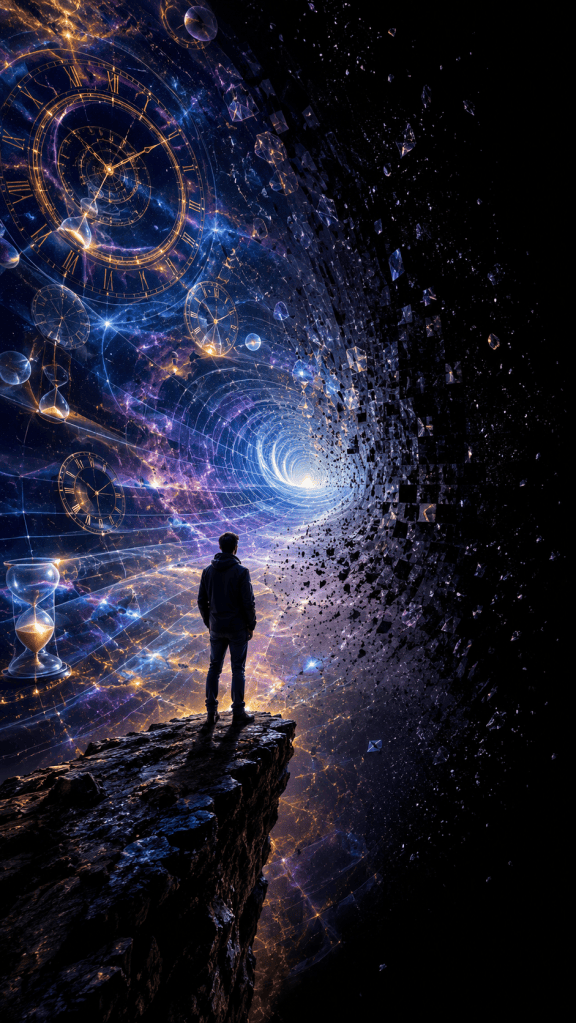
We often speak about time as though it were something that moves.
But physics does not describe time as a substance or a river flowing from past to future.
Instead, time provides part of the framework in which physical events can be ordered and related.
We can distinguish one state from another because something changes.
A star forms, burns, and eventually dies.
A particle interacts with another particle.
A clock changes from one state to the next.
A person grows from childhood into adulthood.
Without change, there would be no sequence of physical events to distinguish.
This gives us an important distinction.
The end of time would not necessarily mean that a clock suddenly stops.
It could mean that the universe reaches a condition in which nothing meaningful can happen anymore.
That is a much stranger idea.
The Most Likely Far-Future Scenario: Heat Death
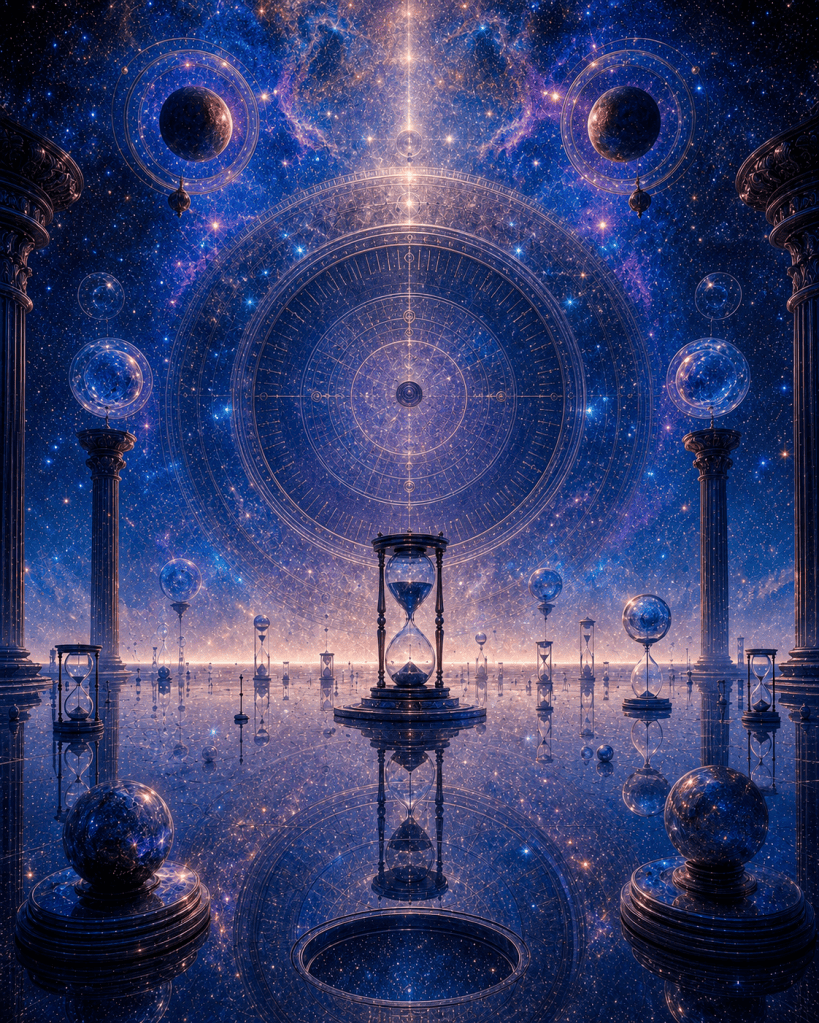
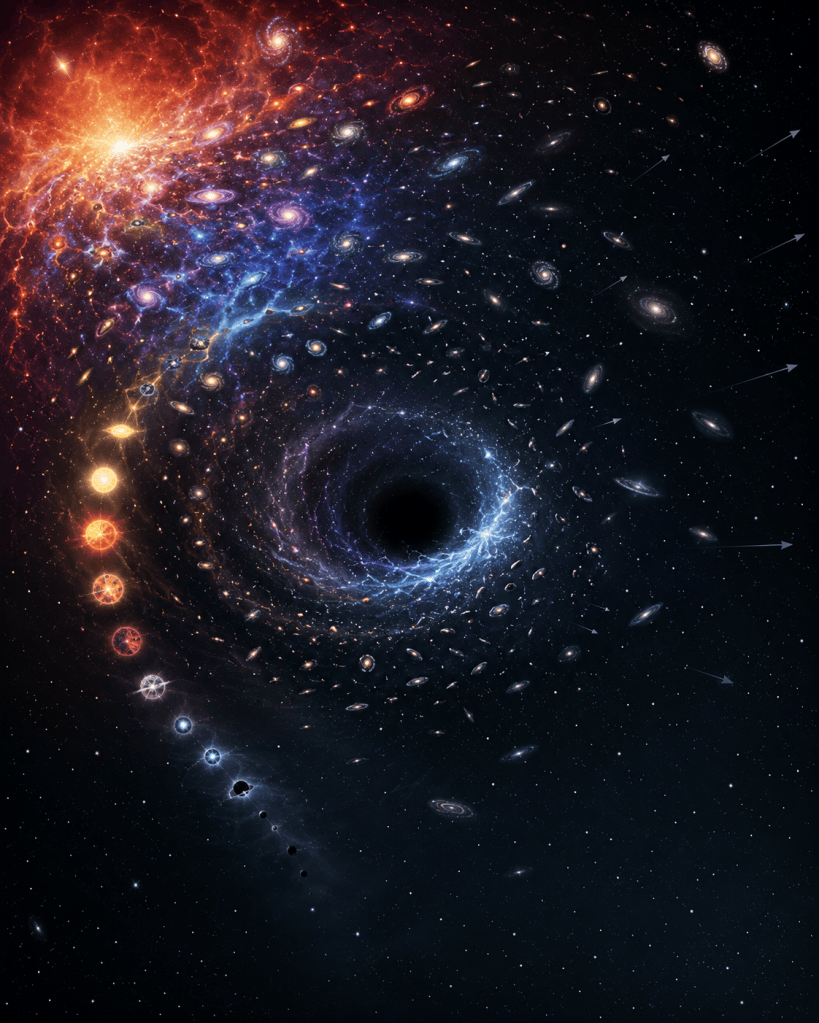
One of the leading possibilities for the distant future of the universe is known as heat death.
It does not mean the universe becomes physically hot in the ordinary sense.
It refers to a state of maximum entropy in which usable energy differences become extremely scarce.
Over immense timescales, stars are expected to exhaust their fuel. Galaxies will change dramatically, and many structures that dominate today’s universe will eventually disappear.
On still longer timescales, black holes are expected to evaporate through Hawking radiation.
Eventually, the universe could approach a state in which energy is distributed extremely evenly.
And that matters because physical processes depend upon differences.
Heat flows because one place is hotter than another.
Objects move because forces and energy differences exist.
Chemical reactions occur because systems can move between different energy states.
If those differences disappear, the capacity for meaningful change becomes increasingly limited.
The universe would not necessarily experience a dramatic final moment.
Instead, it would gradually approach a state in which almost nothing happens.
Would Time Actually Stop?
This is where the language becomes important.
Heat death does not prove that time itself literally disappears.
The equations describing spacetime could continue to contain a time dimension even when the universe approaches maximum entropy.
In that sense, time might continue mathematically.
But something important would be missing:
events.
If nothing changes, there is nothing for a clock to distinguish.
A clock measures physical processes. Its hands move because its internal state changes.
If every physical process eventually became incapable of producing meaningful differences, then the concept of elapsed time would lose its practical meaning.
So perhaps the more precise question is not:
“Will time stop?”
but:
“Can time have meaning in a universe where nothing changes?”
That question is much harder to answer.
Could Time End at the Boundary of Spacetime?
Heat death is not the only possibility physicists have considered.
Some cosmological models allow for very different futures.
If the universe were eventually to collapse in a hypothetical Big Crunch, the structure of spacetime itself could approach an extreme boundary.
Other approaches to quantum gravity suggest that time may not be fundamental at all. Instead, it could emerge from deeper relationships between physical systems.
If time is emergent, then asking whether it continues forever becomes even more complicated.
There may be no fundamental clock beneath reality keeping time running.
Instead, temporal behavior could exist only where physical relationships produce distinguishable change.
These ideas remain areas of active research and speculation.
We do not currently know which, if any, describes the ultimate fate of the universe.
But they reveal something important:
Time may be far less absolute than our everyday experience suggests.
The Paradox of Asking What Comes After
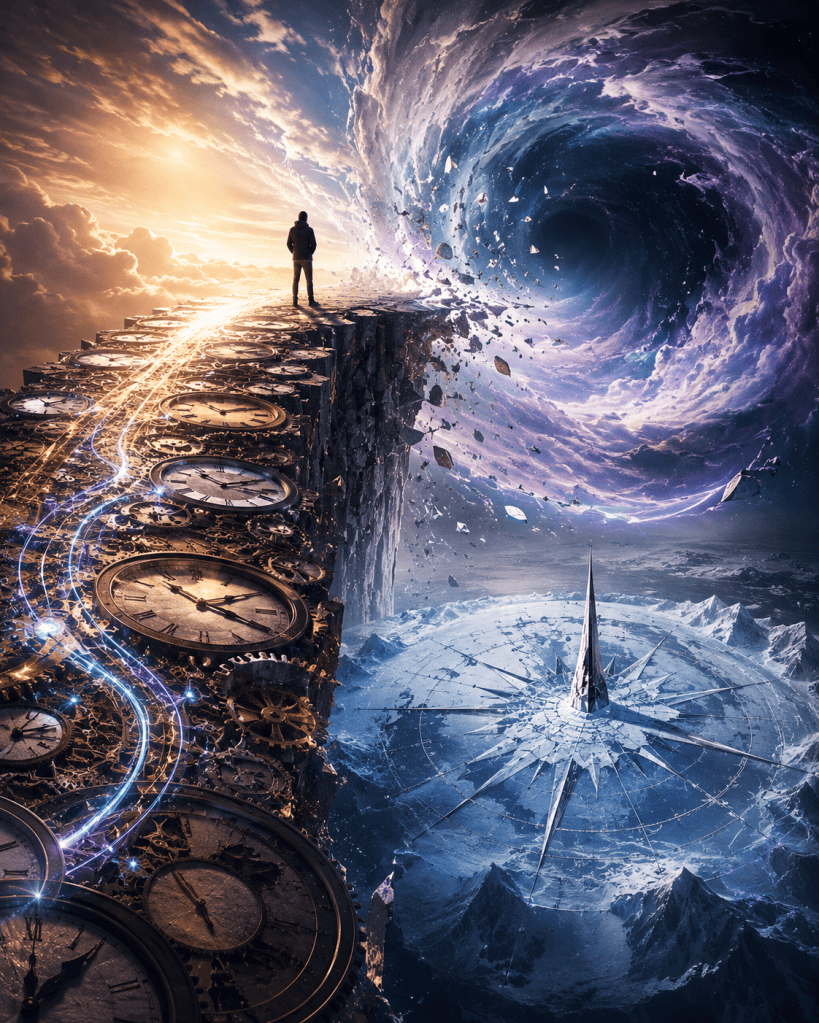
There is an especially strange problem hidden inside the idea of time ending.
We naturally ask:
What happens after time ends?
But the word after already assumes time.
It describes one event occurring later than another.
If time truly ceased to exist, there would be no later moment in which something else could happen.
It is similar to asking what lies north of the North Pole.
The question contains an assumption that no longer applies.
This may be why the end of time is so difficult to imagine.
Our minds are built around sequence.
Something happened.
Something is happening.
Something will happen.
Removing that structure is not simply imagining an empty future.
It is imagining the absence of future altogether.
A Universe Without Change
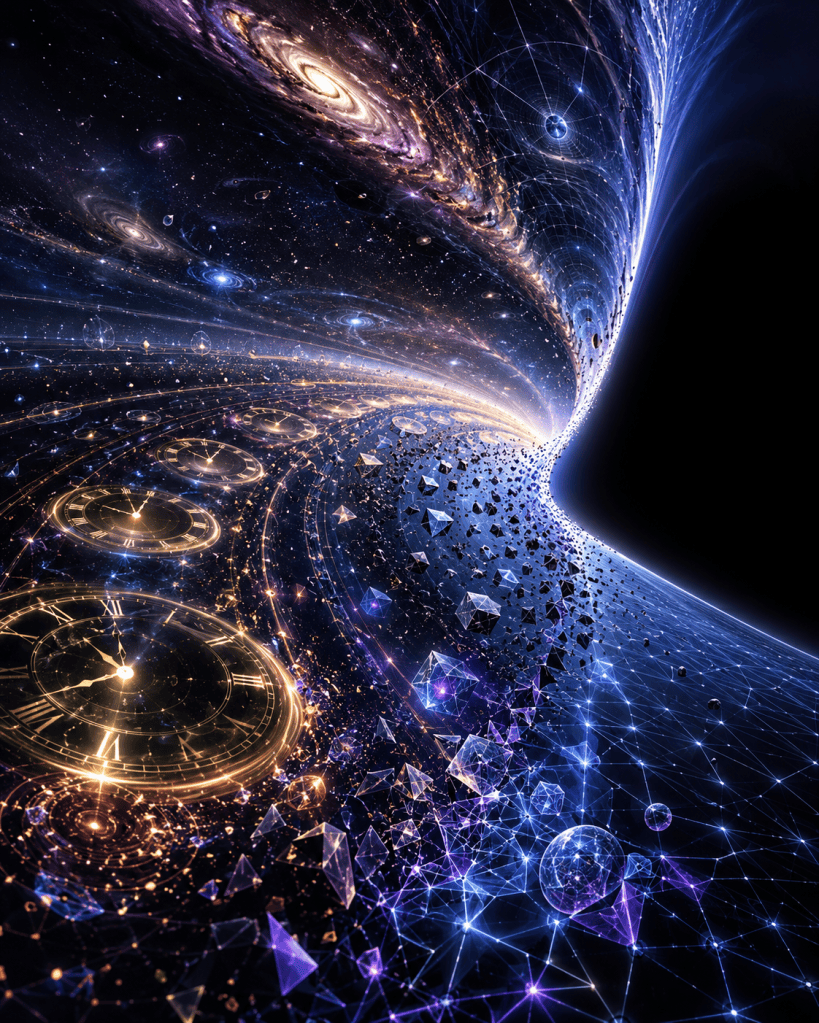
Now take the idea one step further.
Imagine a universe in which there is:
No meaningful change.
No motion.
No new physical interactions.
No accumulation of new information.
No events that can be distinguished from one another.
It would not necessarily be a dark universe.
Darkness is still a physical condition.
It would not necessarily be silent.
Silence still describes an experience unfolding through time.
It would not even be accurate to call it empty.
The deeper possibility is stranger:
There would simply be nothing new to distinguish.
The universe could still exist as a physical or mathematical structure, depending on the underlying theory.
But from the perspective of events and experience, there would be no unfolding.
And that brings us directly back to consciousness.
What Would Happen to Consciousness?
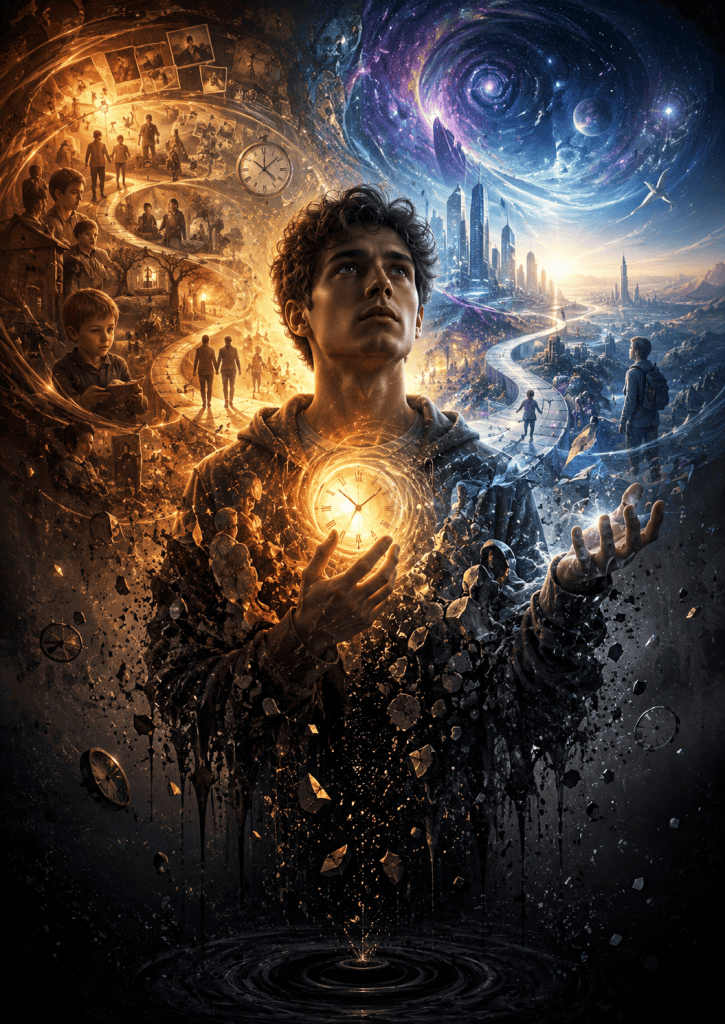
Our experience of consciousness depends upon change.
We perceive because information arrives.
We think because mental states shift.
We remember because information about previous states has been retained.
We anticipate because our minds model possibilities that have not yet occurred.
Without change, these processes cannot continue.
There could be no new memory because nothing new would happen.
There could be no new experience because experience requires a transition from one state to another.
There could be no anticipation because there would be no future event to anticipate.
So the end of meaningful physical change would also mark the end of consciousness as we know it.
This does not mean physics has demonstrated that consciousness must disappear in every conceivable theory of reality.
It means something much more immediate:
The consciousness we recognize requires an unfolding process.
It requires a before and an after.
Why This Matters While Time Still Exists
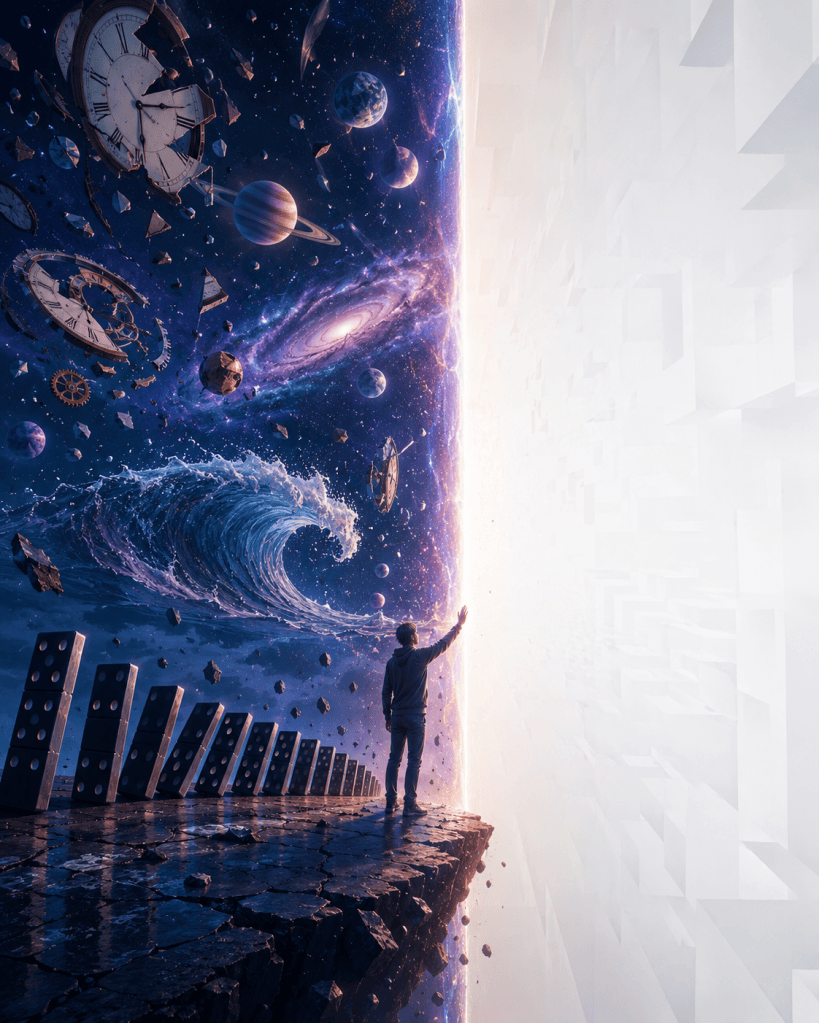
It is tempting to treat the end of time as an impossibly distant problem.
But the question reveals something about our existence right now.
Every moment of experience depends upon change.
Every memory is evidence that something happened.
Every decision creates a distinction between what might have happened and what actually happened.
Every relationship exists through a history of interactions.
Every life is a sequence.
We rarely notice this because time feels like the background rather than the structure of experience itself.
But perhaps that is precisely why the question matters.
We understand the importance of time most clearly when we imagine a reality without it.
Connecting to Humans Actuators of Time
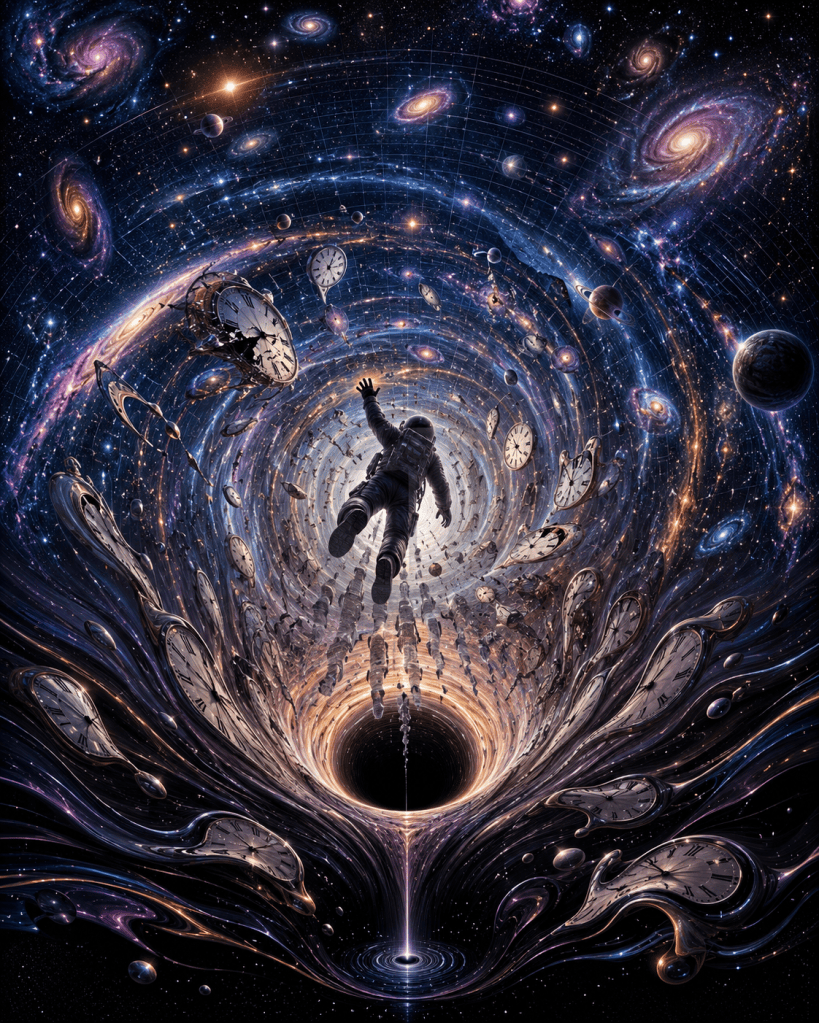
This perspective connects directly to the central idea explored in Humans Actuators of Time.
If time emerges from change, interaction, and relationships between events, then humans do not simply occupy time.
We participate in its lived structure.
We notice change.
We preserve information about what has happened.
We anticipate what might happen next.
And we transform those experiences into stories.
The universe does not need human beings in order for physical change to occur.
But human consciousness gives that change another dimension: meaning.
A physical event happens.
A mind remembers it.
Another event follows.
The mind connects the two.
A sequence becomes a story.
And that story becomes part of a life.
In this sense, the time we experience is not merely a measurement of physical processes.
It is the unfolding of change through awareness.
The Deeper Insight
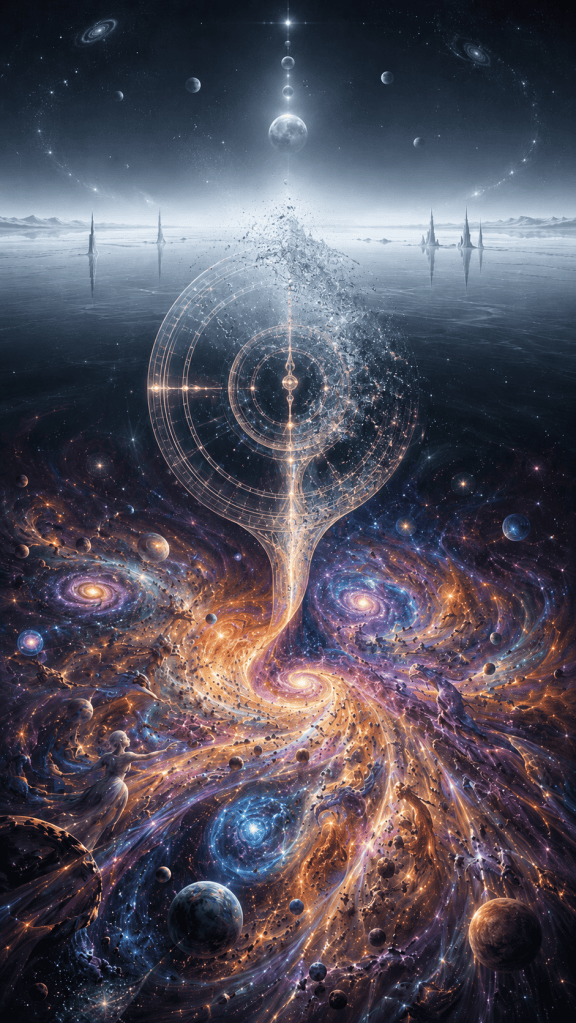
Perhaps the most important lesson is not that time will someday end.
We do not know that.
The deeper lesson is that time is not guaranteed to have the meaning we instinctively give it.
We imagine time as something permanent that exists independently of everything else.
But modern physics gives us reasons to question that intuition.
Time is intertwined with spacetime, physical processes, entropy, information, and change.
If the universe changes, temporal relationships have meaning.
If the universe approaches a state where meaningful change becomes impossible, the practical meaning of time becomes increasingly difficult to define.
And if time is ultimately emergent rather than fundamental, then our familiar experience of temporal flow may be something that arises from deeper relationships within reality.
That possibility changes the question.
Instead of asking only whether time will end, we can ask:
What is it about change that allows time to exist in the first place?
Conclusion: As Long as Change Continues
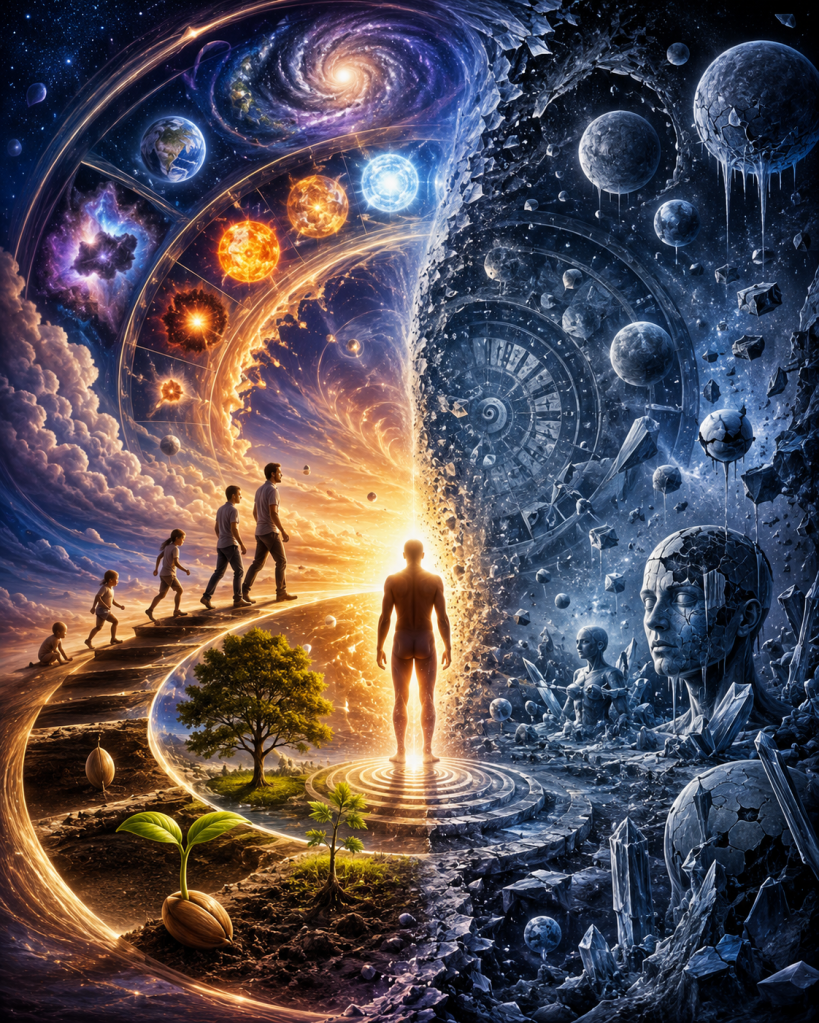
Physics suggests that the universe could eventually approach a state in which meaningful physical change becomes extraordinarily rare or perhaps effectively impossible.
Whether that would constitute the literal end of time remains an open question.
But it reveals something profound.
Time does not exist for us as an isolated thing.
We know it through change.
We measure it through processes.
We remember it through information.
And we experience it through consciousness.
Perhaps the end of time would not be a final moment when a cosmic clock reaches zero.
Perhaps it would be something much quieter:
A universe in which there are no more differences to unfold.
No more events to separate.
No more experiences to remember.
For now, however, change continues.
Stars are forming.
Planets are turning.
Cells are growing.
People are thinking, choosing, remembering, and creating.
The universe is still unfolding.
And as long as change continues, so does the story of reality—and our place within it.
From the Publisher
What happens when we follow the question of time to its most distant possibility?
The idea that time could someday lose its meaning forces us to look beyond clocks and calendars and consider what time actually depends upon: change, information, physical processes, and experience.
This is one reason JJ Simon’s work continues to resonate with readers who enjoy exploring the space where scientific discovery meets human experience.
Rather than treating the ultimate fate of time as a prediction carved in stone, he approaches it as an invitation to examine what physics can—and cannot—tell us about the universe and our place within it.
Continuing the Exploration
If this essay sparked new questions about time, consciousness, and the nature of reality, you may also enjoy other essays in the Time, Consciousness, and New Science blog series or JJ Simon’s companion video reflections.
The JJ Simon — Consciousness, Reality & Deep Thought playlist expands on many of the themes explored throughout these essays, combining philosophy, science, psychology, and visual storytelling into short, thought-provoking experiences designed to inspire deeper reflection.
Whether you’re encountering these ideas for the first time or continuing your exploration of Humans Actuators of Time, the videos offer another way to engage with questions that challenge our assumptions about time, perception, meaning, and human experience.
Watch the playlist here:

Leave a comment